Call us now


Quick answer: Excessive salivation (drooling, or ptyalism) in a cow or buffalo means the animal is either making too much saliva or cannot swallow it normally. The most common causes are a painful mouth (injury, grass awns, wooden tongue or foot-and-mouth disease blisters), something stuck in the gullet (choke), poisoning, heat stress, and a few serious infections such as haemorrhagic septicaemia and rabies. Isolate the animal, check for fever, mouth or foot blisters, bloat and strange behaviour, and call a veterinarian quickly. Never put a bare hand in the mouth of an animal that is acting abnormally.
Cattle and buffaloes make a very large amount of saliva every day. It buffers the rumen and keeps digestion healthy, which is why a cow chewing cud often has a moist muzzle and a little froth at the lips. (We explain the science in how saliva buffers the rumen.) That is normal.
It is not normal when you see:
Sharp, dry stalks, thorny weeds, grass awns or a piece of wire can cut the gums, cheek or tongue. The resulting inflammation (stomatitis) makes chewing painful, so the animal drools and eats slowly or drops feed from its mouth. Look for a cut, ulcer or something stuck between the teeth or under the tongue. Changing to softer, cleaner fodder often helps the mouth heal once the cause is removed.
Bacteria that enter through small cuts in the mouth can cause a hard, swollen, painful tongue that may stick out, with profuse salivation and difficulty eating. This is called wooden tongue. A similar infection of the jaw bone (lumpy jaw) causes a hard swelling on the face. Both need a vet, because they respond to a prompt course of treatment but get worse if left.
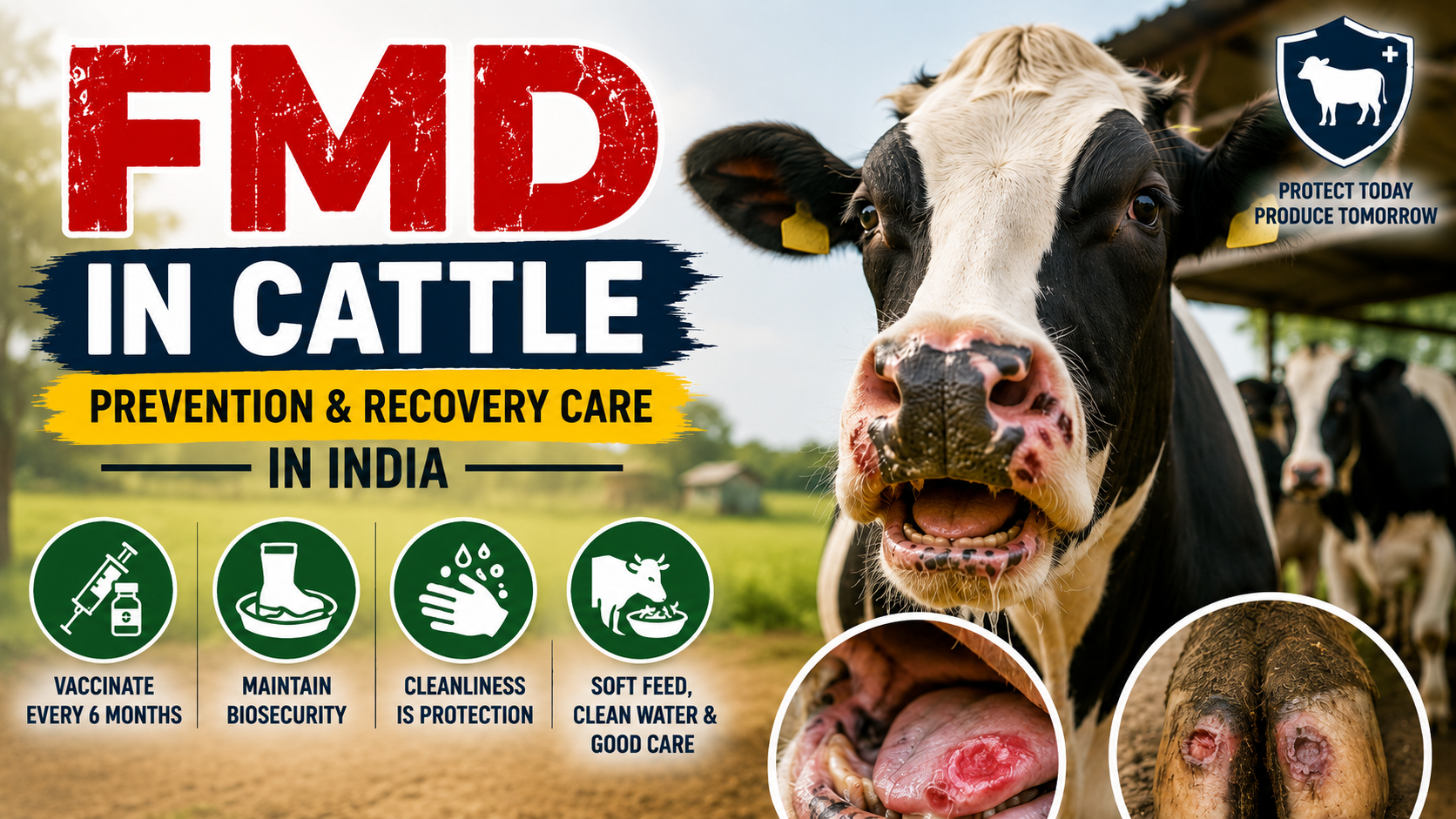
FMD is the cause every Indian farmer should think of first when drooling comes with fever. Typical signs are ropy, stringy saliva, lip smacking, blisters on the tongue, gums and lips, blisters between the hooves leading to lameness, blisters on the teats, and a sharp fall in milk. It spreads very fast through a village. Isolate the animal, stop movement of animals and people, and inform your veterinarian or the animal husbandry department. See our guide to FMD prevention and recovery care and the cattle vaccination schedule (FMD, HS, BQ).
Cattle tend to choke on a single solid object such as a potato, turnip, beet, mango, maize cob or a large lump of feed. The animal suddenly drools heavily, stretches its head and neck, may cough or bring feed and water back through the nose, and often develops bloat on the left side because gas cannot escape. Choke with bloat is an emergency: call a vet at once. Do not push a stick or pipe down the throat, because this can tear the gullet.
Heavy salivation with trembling, diarrhoea, frothing or collapse can follow exposure to some insecticides (for example, organophosphate sprays and dips) and other chemical or plant poisonings. Think about anything new the animal may have eaten or been sprayed with in the last few hours, and call the vet immediately. See fodder poisoning in cattle (HCN, nitrate and oxalate) and lantana poisoning.
In the monsoon, drooling with a high fever, a hot swelling under the throat and noisy breathing points to HS, especially in buffaloes. It can kill within hours, so treat it as an emergency. Read our HS guide: signs, treatment and pre-monsoon vaccination.
In peak summer, cattle and especially buffaloes may breathe with an open mouth, pant and drool. Shade, cool clean water, fans or sprinklers and feeding in the cooler hours usually bring relief. See heat stress in dairy cattle.
Rabies is rare but must never be missed. An affected animal may drool and seem unable to swallow (as if something is stuck in its throat), bellow in an unusual voice, stop eating, become restless or aggressive, then weak and paralysed. Rabies is fatal and can spread to people through saliva. If an animal has been bitten by a dog or behaves strangely, keep people away, do not examine its mouth by hand, and call your veterinarian at once. Anyone exposed to its saliva should see a doctor the same day.
A broken jaw, loose or sharp teeth, or a swelling in the cheek can make chewing and swallowing painful, causing drooling, dropped feed and weight loss. These need a veterinary examination.
Call a vet immediately if drooling comes with any of these: bloat or distress, food or water coming from the nose, high fever with throat swelling, breathing difficulty, trembling or collapse, or any change in behaviour such as aggression, bellowing or paralysis.
Treatment depends entirely on the cause, which is why diagnosis matters. A vet will examine the mouth (sometimes after sedation), the throat and gullet, check for fever, blisters and bloat, and decide on the treatment. That may mean removing a foreign body, clearing a choke and relieving bloat, a course of medicines for wooden tongue or infection, mouth care and pain relief for sores, an antidote for poisoning, or control measures for FMD or HS in the herd.
A drooling animal often eats little for several days, so milk yield and body condition drop. Once your vet has dealt with the cause:
These supplements support recovery. They do not treat the cause of drooling, which needs your vet. For more choices, see our guide to the best digestive powder for cattle in India, and if your animal has stopped chewing cud as well, read cow stopped chewing cud: causes and first aid.
The usual reasons are a painful mouth (cut, thorn, ulcer, wooden tongue or FMD blisters), a choke, poisoning or heat stress. Drooling with fever, blisters, bloat or abnormal behaviour needs a vet straight away.
There is no single treatment, because drooling is a sign, not a disease. The vet treats the cause, for example removing a foreign body, clearing a choke, treating wooden tongue, or controlling FMD or HS. Supportive care with soft feed, water and rest helps recovery.
Safe home steps are limited to isolating the animal, offering clean water and soft feed, giving shade, and gently removing a visible piece of straw or thorn from a calm animal. Avoid drenching an animal that cannot swallow, and don't delay calling the vet if there is fever, blisters, bloat or strange behaviour.
Yes. Buffaloes have few sweat glands and feel heat strongly, so open-mouth breathing and drooling are common on very hot days. If drooling continues after the animal has cooled down, or comes with fever, look for another cause.
Normal saliva is not a concern, but saliva from an animal with possible rabies is dangerous. Wear gloves when examining any drooling animal, and see a doctor promptly if saliva from a suspect animal gets into a wound, eyes or mouth.
References: Stomatitis in Large Animals, MSD Veterinary Manual; Esophageal Obstruction (Choke) in Large Animals, MSD Veterinary Manual; Mouth Problems in Cattle, NADIS; Foot and Mouth Disease, World Organisation for Animal Health (WOAH); Rabies in Animals, MSD Veterinary Manual.
This article is general educational information and does not replace a veterinary examination. Always consult your veterinarian when a cow or buffalo drools excessively.
By Cattle Remedies