Call us now
.png)

Quick answer: Hardware disease (traumatic reticuloperitonitis) happens when a cow or buffalo swallows a nail, wire or other sharp object that pierces the wall of the reticulum, the second stomach. Typical signs are a sudden drop in feed intake and milk, mild fever, an arched back, reluctance to move or lie down, and grunting when walking downhill or when pressure is put under the chest. It needs a veterinarian quickly: treatment is usually a rumen magnet plus antibiotics, sometimes surgery, and prevention comes down to keeping metal out of feed and sheds.
Cattle do not sort their feed with their lips the way goats do. They wrap their tongue around fodder and swallow it quickly, chewing it properly later as cud. Any wire, nail, pin or sharp piece mixed into chaff, silage, concentrate or grazing land can go straight down. Heavy objects sink into the reticulum, where strong contractions can push a sharp point through the wall.
Common sources on Indian farms include:
Plastic bags do not pierce the stomach, but they build up in the rumen and cause their own problems; see our article on pica, or why cows eat soil and lick walls, which often lies behind this habit.
Your vet will check temperature, rumen movement and heart sounds, and may do simple pain tests such as lifting the skin over the withers or pressing under the chest to see if the animal grunts. Where available, ultrasound shows inflammation around the reticulum and an X-ray shows metal objects. Blood tests can show inflammation. Other conditions such as indigestion, ketosis or a displaced stomach can look similar, so diagnosis by a vet matters.
Many cattle recover well when treated early. Cases where the object has reached the heart have a poor outlook, which is why early action matters.
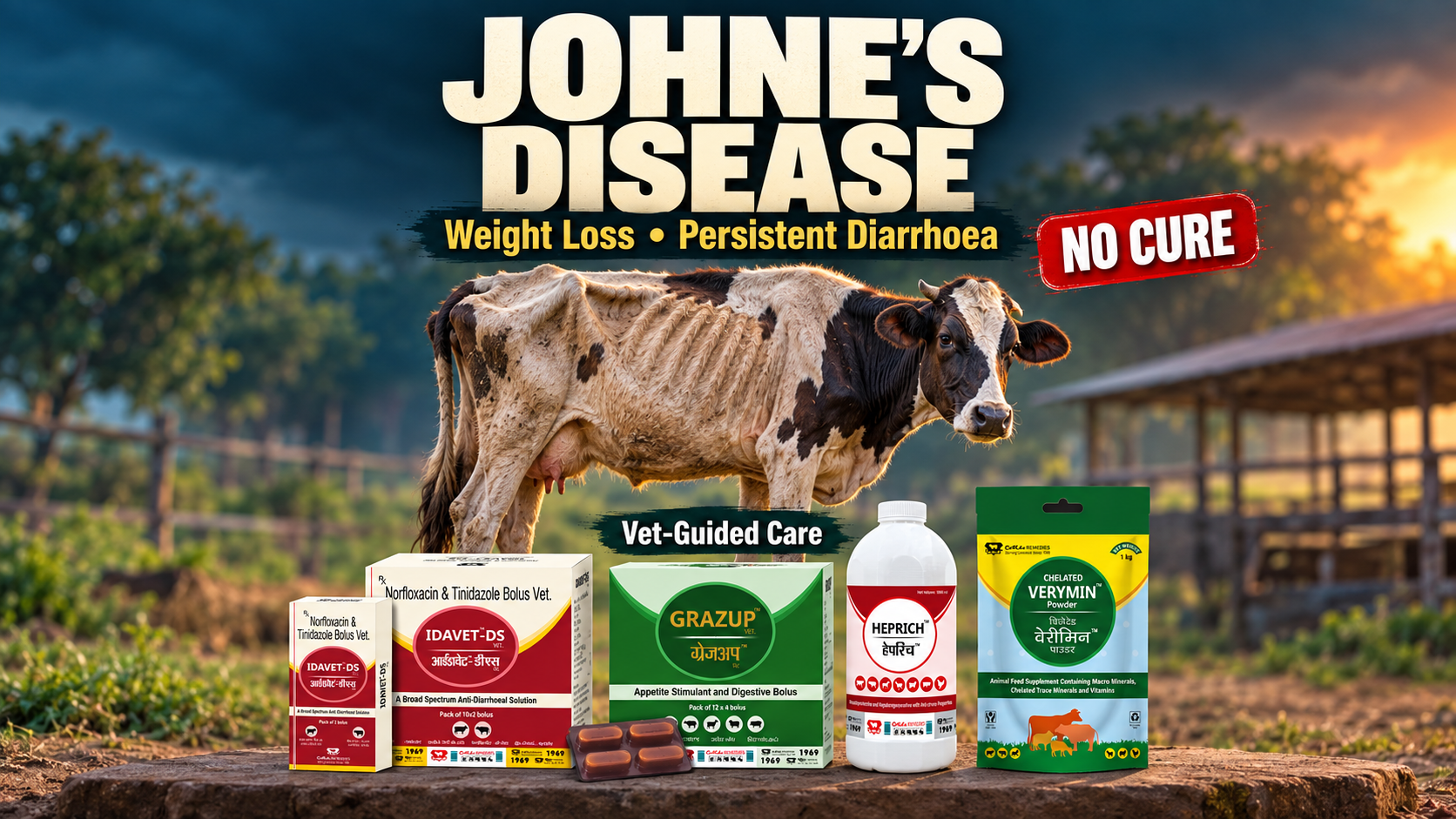
Once your veterinarian has treated the cause, getting the rumen working and the animal eating again is the next goal. Offer fresh water, good-quality green fodder and soft, easily digested feed in small amounts. Herbal digestive support can help appetite during convalescence: Cattle Remedies Grazup bolus is an appetite and digestive supplement used in periods of weakness and debility, and Cattle Remedies Ruminova, an improved Cattle Remedies formulation, supports rumen function and feed intake after illness or stress. Neither replaces a magnet, antibiotics or surgery. See our guide to the best digestive powder for cattle in India.
A sudden fall in appetite and milk, mild fever, an arched back, reluctance to move, and grunting when getting up, lying down or walking downhill. A cow with these signs should be seen by a veterinarian the same day.
Yes, many do. If treated early with a rumen magnet, antibiotics and rest, many cattle recover; some need surgery to remove the object. Recovery is poor if the object has reached the heart, so do not wait.
Remove wire from straw before chopping, use magnets on chaff cutters and feed chutes, clear scrap from sheds and grazing areas, avoid feeding mixed waste, and correct mineral deficiencies that make cattle chew odd objects. Ask your vet about preventive rumen magnets.
References: MSD Veterinary Manual — Traumatic Reticuloperitonitis in Cattle; Braun U. et al., Treatment of 503 cattle with traumatic reticuloperitonitis (NCBI/PMC).
This article is general educational guidance and is not a substitute for veterinary care. A cow with sudden loss of appetite, fever, grunting or chest swelling needs a qualified veterinarian.
By Cattle Remedies