Call us now
.png)

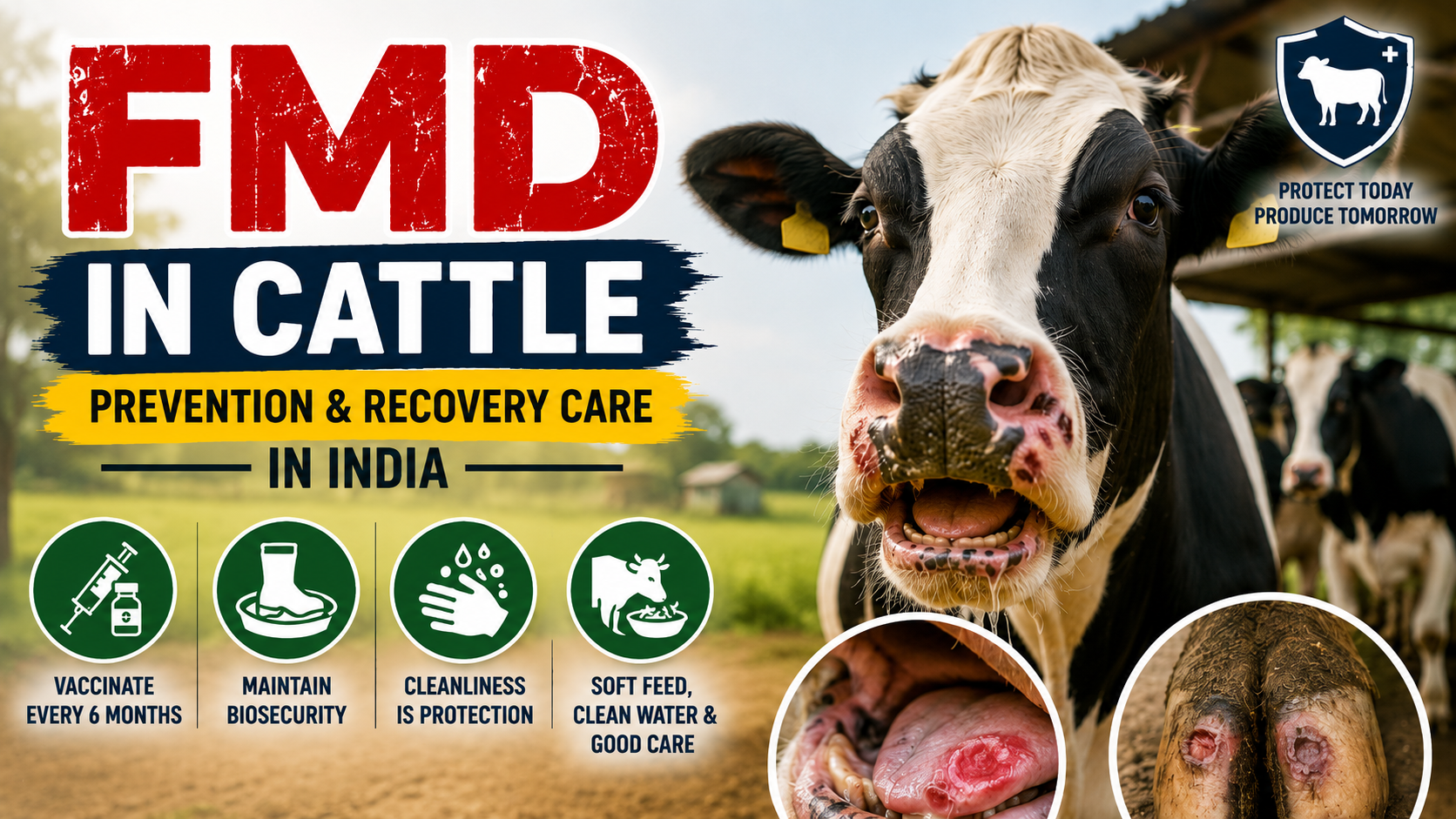
Short answer: Foot-and-mouth disease (FMD) is a highly contagious viral disease of cattle and buffalo with no specific antiviral cure. Control rests on two things — vaccinating every animal every six months and keeping the virus off your farm. If animals are already affected, the job is supportive care: soft palatable feed, clean water, mouth and foot hygiene, and a proper recovery plan to rebuild appetite, liver function and body condition, all under veterinary supervision.
FMD is caused by an aphthovirus that affects cloven-hoofed animals — cattle, buffalo, sheep, goats and pigs. In adult cattle, mortality is usually low, but that understates the damage. The real cost is a sharp drop in milk yield that often never fully returns, prolonged loss of body condition, poor fertility for months afterwards, and animals that become heat-intolerant and chronically unthrifty. In young calves the virus can damage heart muscle and cause sudden death without the classic blisters ever appearing.
FMD is a notifiable disease in India. Suspected cases must be reported to your local veterinary officer.
Because several conditions cause mouth ulcers and lameness, confirmation needs a veterinarian. Do not self-diagnose and do not delay reporting.
Vaccination is the backbone of FMD control. Under India's National Animal Disease Control Programme (NADCP), cattle and buffalo are vaccinated against FMD twice a year, free of cost, through state animal husbandry departments. Practical points:
There is no antiviral treatment. Everything you do is aimed at keeping the animal eating, drinking and comfortable while its immune system clears the virus, and at preventing secondary bacterial infection. All medication, including any antibiotic for secondary infection, must come from your veterinarian.
The weeks after the lesions heal decide whether the animal returns to production or stays a chronic poor-doer. Weeks off feed leave a depleted liver, a disturbed rumen and drained mineral reserves. A structured recovery plan should cover appetite, liver and metabolic support, and mineral replenishment.
Cattle Remedies products used in this phase include HEPRICH™, a herbal liver tonic that supports appetite, digestion and metabolic recovery; GRAZUP™ for appetite and growth; and the chelated mineral mixture VERYMIN™ to restore depleted mineral reserves. For a broader comparison of liver support options, see our guide to the best liver tonic for cattle in India. Use these alongside — never instead of — your veterinarian's treatment plan.
No. FMD is viral and no medicine kills the virus. Antibiotics do not treat FMD itself; a veterinarian may prescribe them only to control secondary bacterial infection of mouth, foot or udder lesions. Any product claiming to cure FMD should be treated with suspicion.
Milk yield falls sharply and the milk from affected animals should not enter the food chain during active disease. Follow your veterinarian's and local animal husbandry department's instructions, and observe withdrawal periods for any medicines used.
Vaccine protection is strongest for a few months and wanes, which is why the six-monthly schedule matters. Protection can also fail if the cold chain broke, if the animal was vaccinated while already sick or heavily parasitised, or if the circulating serotype differs. Vaccinated animals that do get infected usually show milder disease and recover faster.
This article is general educational guidance for livestock owners and is not a substitute for veterinary diagnosis. FMD is a notifiable disease — report suspected cases to your local veterinary authority and consult your veterinarian before starting any treatment.
Not every drooling cow has FMD. Mouth injuries, wooden tongue, choke, poisoning and heat stress can also cause heavy salivation. See excessive salivation in cattle: causes and treatment to tell them apart.