Call us now
.png)

Repeat breeding is one of the most common reproductive challenges faced by dairy farmers. A cow or buffalo is considered a repeat breeder when she fails to conceive even after being bred or inseminated three or more times despite having normal estrous cycles and no obvious reproductive abnormalities.
This problem can significantly affect farm profitability by increasing insemination costs, extending calving intervals, reducing milk production efficiency, and delaying the birth of healthy calves. Understanding the causes of repeat breeding and adopting the right management practices can help improve conception rates and overall reproductive performance.
What Causes Repeat Breeding in Cattle?
Repeat breeding is usually caused by a combination of factors rather than a single issue. The most common causes include:
The period immediately after calving plays a critical role in determining future fertility. If the uterus does not recover properly, the chances of conception decrease significantly.
Common uterine problems include:
These conditions create an unhealthy uterine environment, making it difficult for the embryo to survive and develop.
Nutrition is one of the most overlooked causes of infertility in dairy animals.
Deficiencies of essential minerals such as:
can negatively affect hormone production, ovarian activity, egg quality, and embryo development. Animals suffering from mineral deficiencies may show:
Many animals fail to conceive because insemination is performed at the wrong time.
Common heat detection mistakes include:
Accurate heat detection remains one of the most important factors for successful conception.
Even when the animal is healthy, poor-quality semen or improper artificial insemination techniques can reduce pregnancy rates.
Heat stress, poor housing, overcrowding, and inadequate water availability can negatively impact fertility.
High temperatures often reduce feed intake, weaken immunity, and disturb reproductive hormones, resulting in lower conception rates.
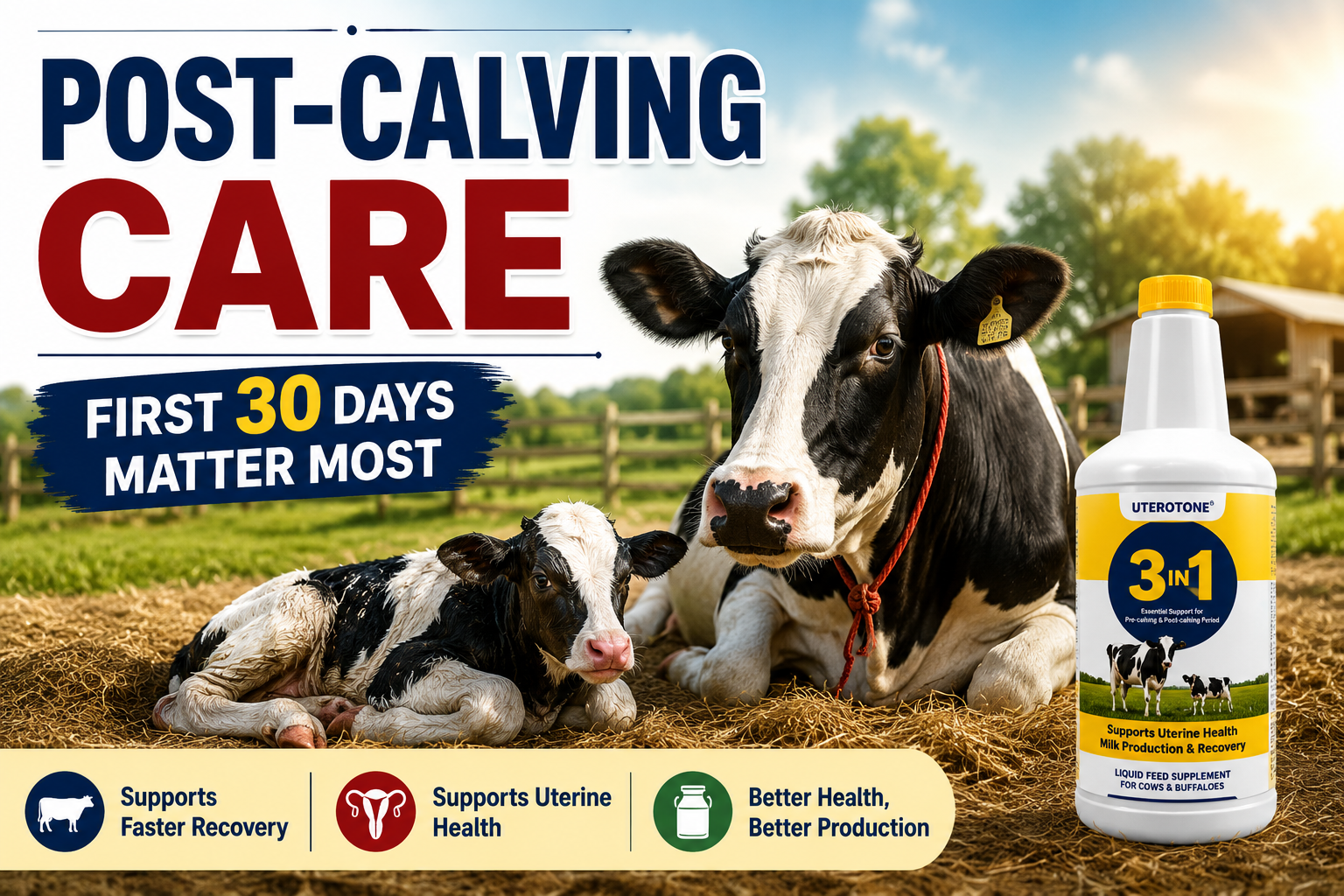
A healthy uterus is the foundation of successful breeding. After calving, the uterus must return to its normal size and condition before the animal can conceive efficiently.
Supporting uterine cleansing and recovery during the post-partum period helps:
For effective post-calving uterine management, Uterotone Liquid can be included as part of a veterinarian-guided reproductive care program.Uterotone is a polyherbal uterine health formulation enriched with Copper and Iron, designed to support uterine functions and reproductive wellness in dairy animals.
By supporting proper uterine recovery after calving, farmers can create better conditions for successful breeding in subsequent cycles.
Even when uterine health is normal, nutritional deficiencies can continue to affect conception rates.
Reproductive performance depends heavily on adequate levels of:
These nutrients support hormone synthesis, ovarian function, egg development, embryo survival, and immune health.
Cattle Remedies Verymin Chelated Mineral Mixture: A Fertility Support Solution
Verymin Powder is a chelated mineral mixture containing essential macro minerals, trace minerals, and vitamins formulated for dairy animals.
Nutritional Components
Benefits of Verymin for Reproductive Performance
Providing a balanced mineral supplement throughout lactation and breeding periods can significantly contribute to improved reproductive efficiency.
To reduce repeat breeding cases on your farm:
Maintain Proper Uterine Health: Monitor animals closely after calving and address retained placenta or infections promptly.
Provide Balanced Nutrition: Ensure adequate energy, protein, minerals, and vitamins in the ration.
Use Quality Mineral Supplementation: Regular supplementation with a scientifically formulated mineral mixture such as Verymin can help address hidden nutritional deficiencies.
Detect Heat Accurately: Observe animals at least 3–4 times daily for heat signs and follow proper breeding timing.
Reduce Stress: Provide clean housing, sufficient drinking water, proper ventilation, and comfortable resting areas.
Follow Regular Veterinary Check-Ups: Routine reproductive examinations can help identify fertility problems before they become severe.
Conclusion
Repeat breeding in cattle is a multifactorial problem that can lead to significant economic losses if left unmanaged. Poor uterine recovery after calving, nutritional deficiencies, heat detection errors, reproductive infections, and environmental stress are among the most common causes.
A comprehensive approach that focuses on both uterine health and nutritional management can greatly improve conception rates. Supporting post-calving uterine recovery with Uterotone Liquid and ensuring adequate mineral nutrition through Verymin Chelated Mineral Mixture can help dairy farmers build a stronger foundation for reproductive success and overall herd productivity.
_________________________________________
Repeat breeding occurs when a cow or buffalo fails to conceive after three or more breeding attempts despite showing normal heat cycles and having no obvious reproductive abnormalities.
Common causes include uterine infections, retained placenta, mineral deficiencies, poor heat detection, improper insemination timing, stress, and poor nutrition.
A healthy uterus is essential for embryo survival. Conditions such as metritis, endometritis, and delayed uterine involution can reduce conception rates and increase repeat breeding cases.
Uterotone supports uterine cleansing, helps in timely expulsion of retained placenta, promotes uterine involution, and supports reproductive health during the post-calving period.
Yes. Deficiencies of minerals such as copper, zinc, manganese, selenium, calcium, and phosphorus can negatively affect fertility, heat expression, ovulation, and embryo development.
Verymin provides essential macro minerals, chelated trace minerals, and vitamins that support fertility, reproductive efficiency, immunity, and overall animal productivity.
Mineral supplementation should ideally be provided throughout the year, especially during late pregnancy, post-calving, and breeding periods to support optimal reproductive performance.
Not all cases can be prevented, but proper nutrition, good uterine health management, accurate heat detection, stress reduction, and regular veterinary care can significantly reduce its occurrence.
Yes. Uterotone is indicated for uterine cleansing after parturition and can be used as supportive management in cases involving retained placenta under veterinary guidance.
Copper, Zinc, Manganese, Selenium, Calcium, Phosphorus, Magnesium, and Vitamins A, D3, and E play important roles in reproductive health and conception success.