Call us now
.png)

The most profitable dairy animals in India are not always the highest yielders — they are the ones that calve again on time. Every month the calving interval stretches beyond the ideal (about 12–13 months in cows, 14–15 in buffaloes) you lose a month of peak milk and delay the next calf, while feeding the animal every single day. Tightening the interval needs no new animal and no new shed — just five habits done on a calendar.
Think of the interval as paid days versus unpaid days. An animal that calves every 12–13 months spends most of her year in milk. Stretch that to 17–18 months — extremely common across India — and you feed 120+ extra days of low or no milk, lose a calf, and push her lifetime production down. Fixing this is usually worth more than a better-yielding animal, because it costs almost nothing.
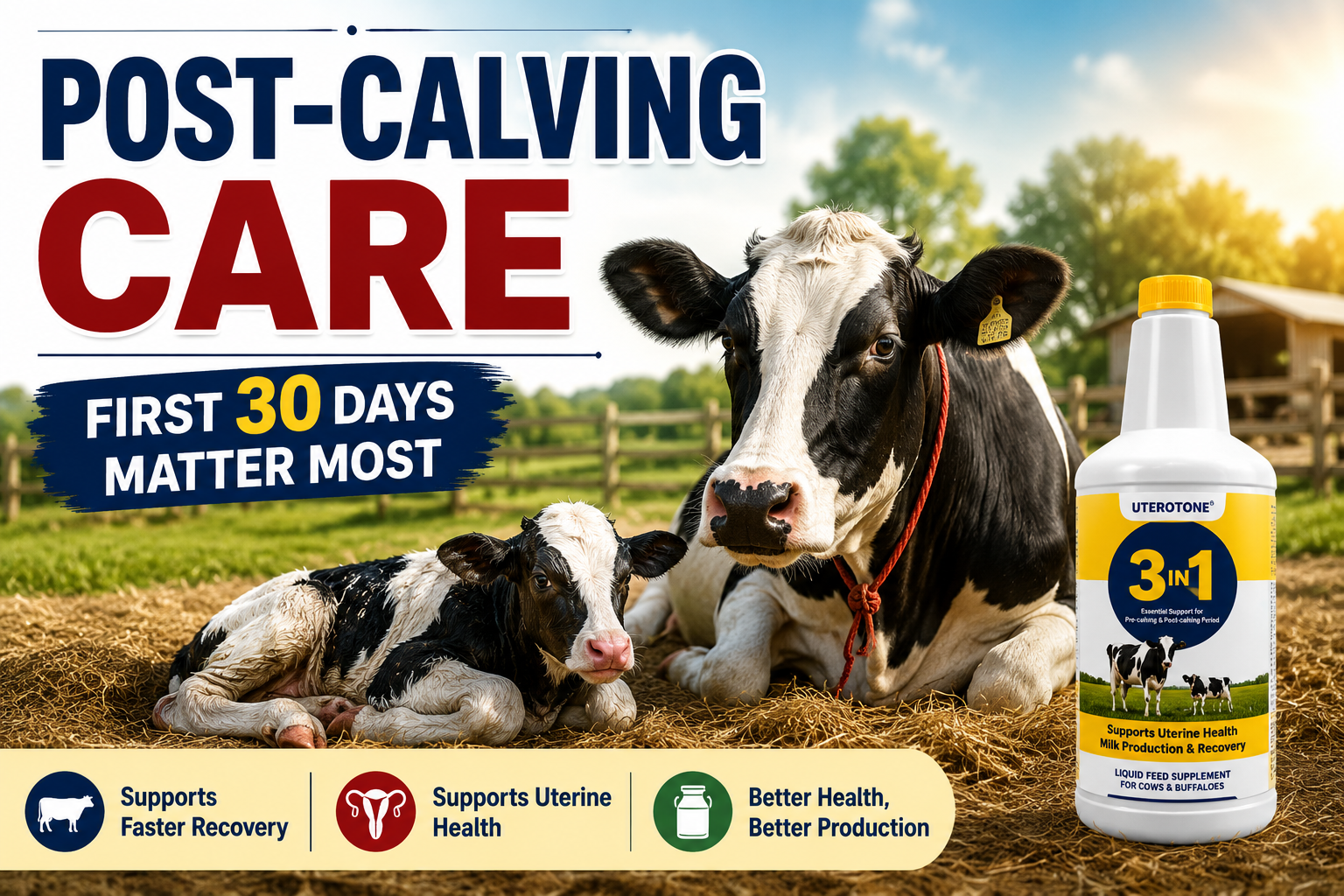
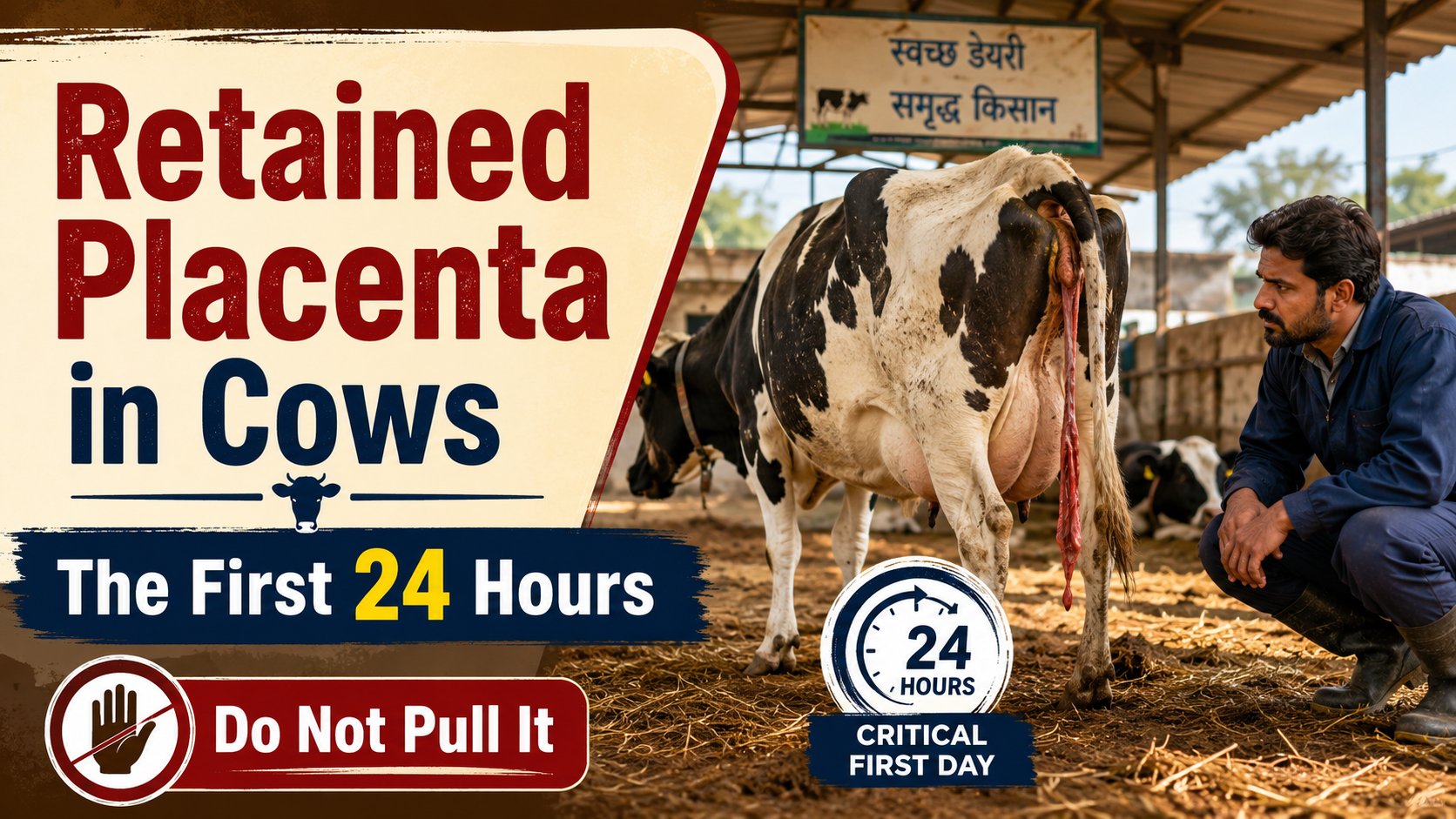
A cow can only conceive on time if her uterus involutes and cleans properly in the first weeks. Watch for retained placenta and dirty discharge — see our guide on retained placenta — and support involution with good post-calving care; many farmers use a herbal uterine tonic such as Cattle Remedies Uterotone after calving with their vet's guidance. Our uterine tonic buying guide compares the options.
Animals that lose too much condition after calving do not cycle. Score condition monthly and act early — the method is in our body condition scoring guide.
Watch twice daily at calm times (early morning, late evening) for standing heat, mounting, mucus and bellowing. Buffaloes show heat quietly and often at night — our article on silent heat explains what most farms miss. A missed heat is a 21-day fine.
Aim to breed from about 60–90 days after calving once discharge is clean and cycles are regular, use a trained AI worker with correct timing (roughly 12 hours after heat starts), and get a pregnancy check 2–3 months after service. An open animal discovered at month five is the most expensive discovery on a dairy farm.
Phosphorus, copper and other trace-mineral gaps are a classic cause of anestrus and repeat breeding — a daily chelated mineral mixture like Verymin is the cheapest fertility input you can buy. If an animal is not cycling at all, read our guide on anestrus and involve your vet early.
About 12–13 months for cows and 14–15 months for buffaloes is a practical target: roughly 2–3 months from calving to successful service, plus pregnancy.
If there is no observed heat by about 60–90 days after calving — or after two failed services — have the animal examined rather than waiting another cycle. Ovarian cysts, uterine infection and mineral deficiency each need different treatment.
No — an animal can be bred while milking. What delays breeding is poor uterine recovery, body condition loss, missed heats and mineral gaps, not lactation itself.
Breeding decisions should involve your veterinarian or AI technician — this guide is general good practice, not a substitute for examination.