Call us now
.png)

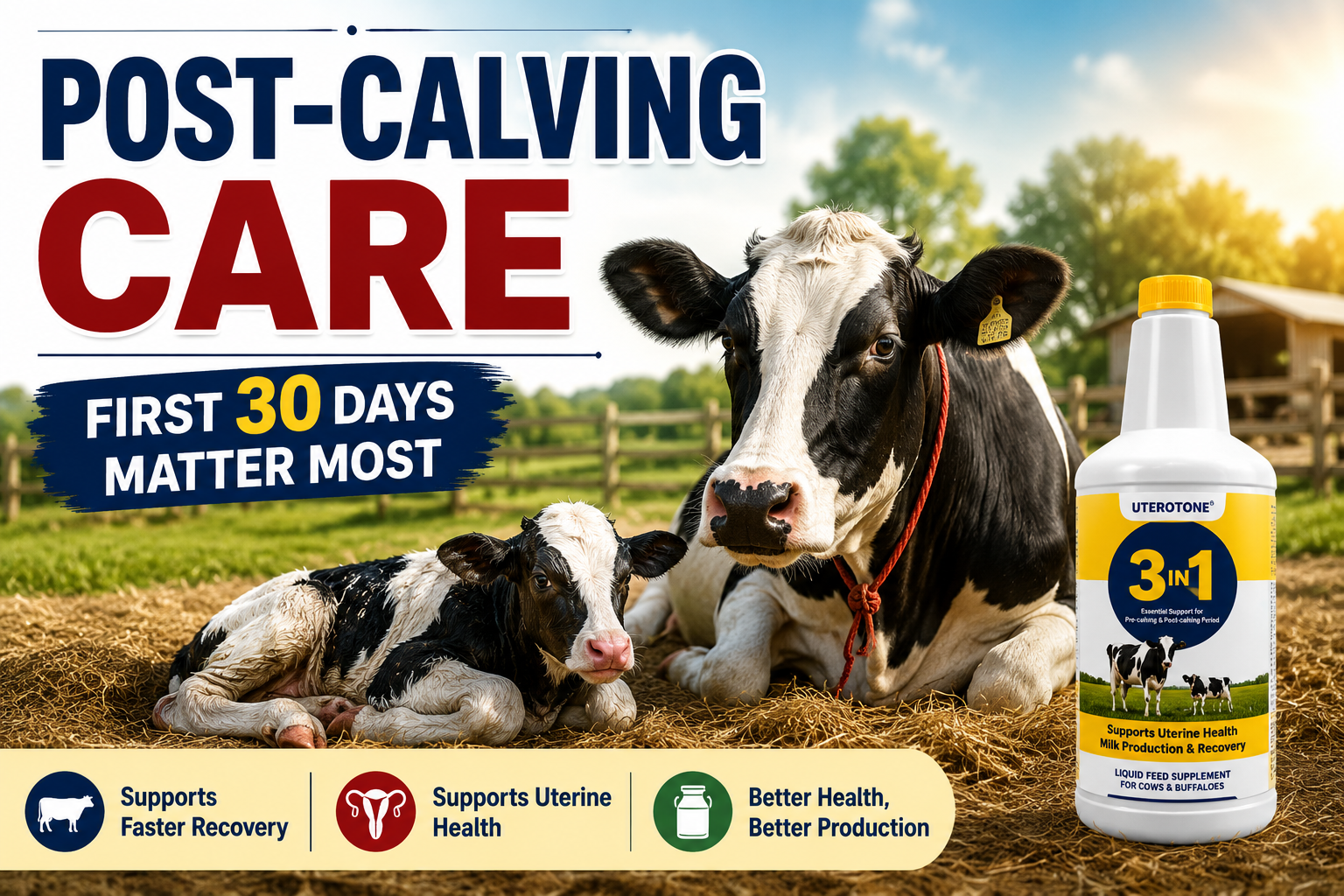
The first 30 days after calving are among the most critical periods in the life of a dairy cow or buffalo. What happens during this transition phase can have a direct impact on milk production, reproductive performance, overall health, and farm profitability for the entire lactation cycle.
Many dairy farmers focus heavily on pregnancy and calving management but often underestimate the importance of post-calving care. A cow or buffalo that recovers quickly after calving is more likely to produce higher milk yields, return to heat on time, conceive earlier, and remain healthier throughout the lactation period.
Proper nutrition, uterine recovery, metabolic support, and disease prevention during the first month after calving are essential for long-term productivity.
Calving places tremendous stress on the body of a cow or buffalo. During this period, the animal undergoes major hormonal, metabolic, and physiological changes.
The uterus must return to its normal size, milk production begins rapidly, feed intake needs increase significantly, and the reproductive system starts preparing for the next breeding cycle.
If proper management is neglected during this phase, animals become more vulnerable to:
These problems can negatively affect the profitability of the entire lactation.
The first few hours after calving are extremely important.
Ensure that the cow or buffalo is placed in a clean, dry, and comfortable environment. Fresh drinking water should be available immediately after calving because animals lose significant fluids during parturition.
Observation during the first 24 hours is essential. Farmers should monitor:
Any abnormalities should be reported to a veterinarian immediately.
After calving, the uterus gradually shrinks back to its normal size through a process known as uterine involution. Proper involution is essential for future fertility. Delayed uterine recovery can increase the risk of infections, repeat breeding, and prolonged calving intervals.
Good nutrition, adequate mineral supplementation, and proper postpartum management help support uterine health and recovery.
According to the Cattle Remedies Uterotone 3 in 1 product information, the formulation is designed to support proper uterine involution and normal lochial discharge following calving. It also helps support timely expulsion of the placenta.
Milk production increases rapidly after calving, but feed intake often takes time to reach its peak. This creates a negative energy balance that can affect both productivity and fertility.
A balanced ration should include:
Special attention should be given to calcium, phosphorus, magnesium, and trace minerals because deficiencies can lead to metabolic disorders and reduced productivity.
Metabolic disorders are common during the early postpartum period.
Milk fever occurs when blood calcium levels drop suddenly after calving. Ketosis develops when animals mobilize excessive body fat to meet energy requirements.
These conditions reduce milk production, weaken immunity, and delay reproductive recovery.
Nutritional support before and after calving plays a crucial role in minimizing these risks.
Uterotone 3 in 1 contains minerals, vitamins, and carbohydrate precursors designed to support transition animals and help reduce the probability of milk fever, ketosis, and related metabolic disorders.
Normally, the placenta should be expelled within a few hours after calving.Retained placenta can increase the risk of uterine infections, delayed fertility, and reduced milk production. Farmers should closely observe cows and buffaloes during the first day after calving and seek veterinary advice if placenta retention occurs.Proper postpartum nutritional support can help improve uterine function and recovery.
The early lactation period is also a high-risk time for mastitis and udder infections.
Maintaining udder hygiene is essential.
Farmers should:
Healthy udders contribute directly to higher milk yields and better profitability.
One of the key goals of post-calving management is ensuring that cows and buffaloes return to normal reproductive cycles as early as possible.
Animals experiencing poor nutrition, stress, metabolic disorders, or uterine infections often show delayed heat and reduced conception rates. Regular monitoring of reproductive health during the first month after calving helps identify potential fertility issues before they become costly problems.
For dairy farmers looking to support recovery during the transition period, Uterotone 3 in 1 can be included as part of a comprehensive management program.
The product is a polyherbal liquid feed supplement fortified with minerals, vitamins, calcium, phosphorus, magnesium, and carbohydrate precursors designed for peri-parturient and post-parturient cows and buffaloes.
According to the product literature, Uterotone 3 in 1 helps:
When combined with proper nutrition, hygiene, and veterinary supervision, it can help cows and buffaloes recover more efficiently after calving.
Conclusion
The first 30 days after calving lay the foundation for successful lactation, fertility, and long-term productivity. Dairy farmers who focus on nutrition, uterine recovery, metabolic health, and disease prevention during this critical period are more likely to achieve higher milk yields and better reproductive performance.
A well-planned post-calving management program, supported by proper nutritional supplementation such as Uterotone 3 in 1, can help cows and buffaloes recover faster, maintain better health, and return to peak productivity sooner.
The first month after calving influences milk production, fertility, uterine recovery, and overall health throughout the lactation cycle.
Common issues include retained placenta, milk fever, ketosis, uterine infections, reduced appetite, and delayed fertility.
In most cases, the placenta should be expelled within a few hours after calving. Delayed expulsion may require veterinary attention.
Uterine involution is the process by which the uterus returns to its normal size and condition after calving.
Balanced nutrition, mineral supplementation, good hygiene, disease prevention, and proper uterine recovery all contribute to improved fertility.
Uterotone 3 in 1 supports uterine involution, placental expulsion, metabolic health, and milk production during the transition period.
Yes. Adequate energy, protein, minerals, and vitamins are essential for maximizing milk yield and maintaining animal health.
8. When should post-calving support supplements be given?
Post-calving nutritional support should begin around calving and continue during the transition period as recommended by a veterinarian or nutritionist.
See also: Best Cattle Uterine Tonic in India — our in-depth buying guide.